
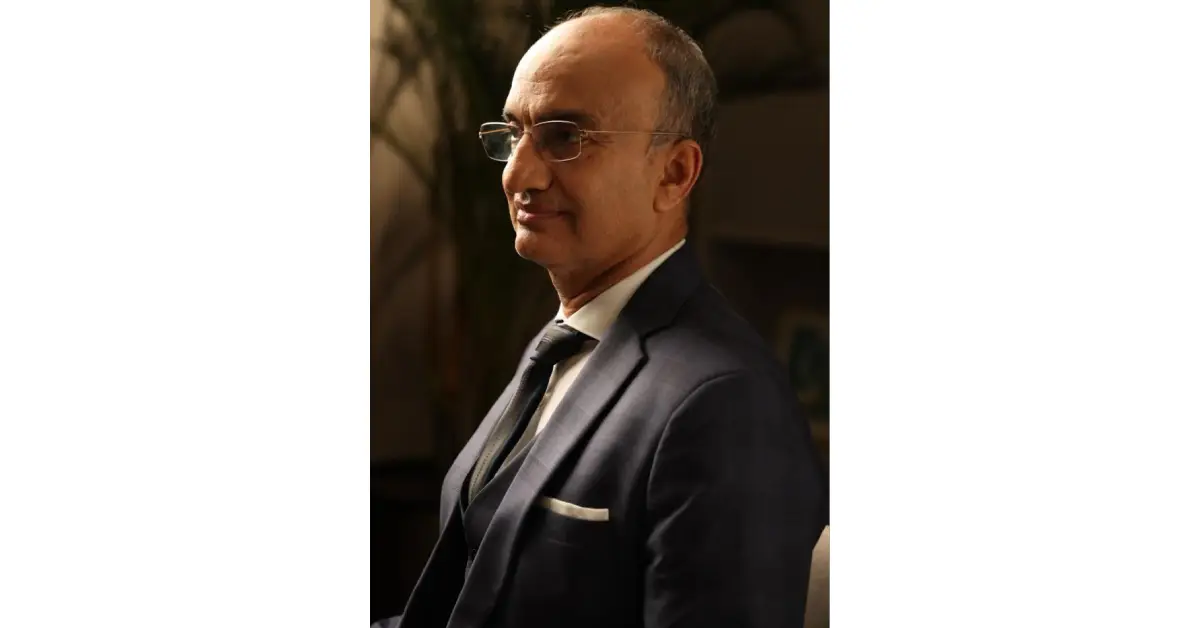
India’s real estate market in 2025 marked a decisive shift towards premiumisation, with luxury and uber-luxury housing emerging as the strongest drivers of value across major metros. Supported by rising affluence, lifestyle-led consumption and large-scale infrastructure investment, the sector continued to attract end-users and long-term capital despite volatility in equity markets. From the growing appeal of branded serviced residences and integrated townships to record office leasing led by global capability centres, real estate reinforced its position as a core asset class. In 2026, luxury consumption, institutional capital and the expansion of financialised investment platforms are expected to shape the sector’s next phase of growth. Deepak Kapoor, Director, Gulshan Group, outlines the key trends and investment themes.
Q1. Listed realty stocks underperformed the broader market in 2025, even as physical real estate remained resilient. What explains this disconnect, and which signals should investors rely on?
Indeed, while stock indices can be volatile, the physical real estate market exhibited remarkable strength in 2025. Fundamental drivers like genuine end-user demand, rising disposable incomes, and unprecedented infrastructure development fuelled robust housing sales. Notably, the luxury and uber luxury segments dominated sales value in major metros. Simultaneously, the commercial office segment saw record absorption, reflecting strong economic confidence. This underlying health confirms real estate’s resilience as a core asset class.
Q2. Luxury housing and branded serviced residences captured a growing share of sales value last year. Is this a cyclical upswing, or does it reflect a deeper structural shift in India’s housing market?
Building on 2025’s luxury wave, 2026 will see trends mature and branded serviced apartments will emerge as a preferred choice in the luxury segment. Premiumisation will extend to holistic, amenity-rich integrated townships with a focus on hospitality-grade amenities. Sustainability transitions from a unique selling point to a baseline expectation. Technology integration will deepen, with smart home features becoming standard. The demand for branded serviced apartments offering a curated lifestyle will continue to be a significant trend.
Q3. Do you expect institutional and foreign capital flows into Indian real estate to accelerate in 2026? Which asset classes offer the clearest risk-adjusted returns?
Absolutely. We anticipate 2026 to attract stronger institutional and foreign capital. Investors will prioritise stable, income-generating assets with clear growth narratives. Topping the list will be Grade-A, ESG-compliant office spaces, particularly those catering to Global Capability Centres. The industrial and warehousing sector will remain a major focus. Additionally, data centres, fuelled by digital adoption, will see significant capital allocation as a new-age infrastructure play.
Q4. With the advent of Small & Medium REITs and the growth of fractional ownership, how meaningfully is real estate being financialised — and what risks should retail investors be mindful of?
REITs and fractional ownership are set to democratise access in 2026. The recent framework for Small & Medium REITs (SM REITs) is a game-changer, poised to unlock numerous mid-sized assets for listing. For retail investors, these instruments offer a golden opportunity. They allow participation in high-value commercial real estate with smaller capital outlays, providing better liquidity, transparency, and stable yields compared to more volatile equity segments. This will significantly broaden the investor base.
Q5. Office leasing was led by Global Capability Centres in 2025. What has changed in India’s value proposition for global occupiers beyond cost arbitrage?
GCCs are now drawn by a strategic value proposition far beyond cost. India’s vast, skilled talent pool in STEM fields is the primary magnet. These centres are evolving into innovation hubs for AI, R&D, and product development. Supportive government policies, world-class infrastructure in SEZs and tech parks, and the availability of high-quality, green-certified Grade-A office spaces that meet global standards create a compelling ecosystem. The imminent Jewar Airport is also enhancing the logistical appeal of regions like Noida.
Q6. Within the NCR, how transformative is infrastructure such as the Noida Expressway and the upcoming Jewar Airport in reshaping long-term residential and commercial demand?
The NCR is experiencing transformative, infrastructure-led growth. Corridors like the Noida Expressway and Noida–Greater Noida Expressway are prime examples, unlocking premium residential and commercial micro-markets. Demand remains robust for luxury and uber luxury housing in these established and emerging corridors. Beyond traditional segments, we see strong momentum in the warehousing and logistics sector, significantly boosted by connectivity to the Jewar Airport.
Q7. Tier-II and Tier-III cities are attracting greater attention from both developers and investors. Are these markets nearing an inflection point, or do structural constraints remain?
Without a doubt. These cities are now serious contenders, driven by a powerful confluence of factors. Affordability and a superior cost-to-value ratio are key residential drivers. Commercially, government-led infrastructure development, smart city initiatives, and improved connectivity are spurring economic activity. Companies, including GCCs, are tapping into the large, skilled talent pool available there, often with lower attrition rates. This holistic development is creating self-sustaining growth cycles.
Q8. After strong capital appreciation across major cities, how do you see rental yields evolving in 2026 across offices, warehousing and housing?
We anticipate rental yields to hold stable or see moderate growth in prime commercial segments like offices and warehousing, supported by strong occupier demand and a demand for quality spaces. In the residential sector, while capital appreciation has been significant, rental yields may see slight improvement as urbanisation and job growth fuel rental demand, particularly in high-demand luxury micro-markets.
Q9. For investors with Rs 1–2 crore to deploy in 2026, where do you see the most compelling balance between yield, liquidity and downside protection?
For this corpus, a blended approach is wise. Consider allocating a portion to fractional ownership or an SM REIT focused on Grade-A offices in tech hubs. For direct investment, a premium apartment in an emerging, infrastructure-linked micro-market of the NCR holds strong potential. Besides, under-construction projects in cities close to metros, as well as those in the emerging residential and commercial hubs, offer value propositions in the Rs 1–2 crore bracket. That apart, the Yamuna Expressway, benefiting from the Jewar Airport and sustained commercial demand, offers promising long-term appreciation, especially in projects by established names like Gulshan Group.
Q10. What were the key lessons from 2025 for developers and investors navigating a more regulated, institutionally driven real estate market?
2025 offered crucial lessons. First, it reaffirmed the resilience of Indian real estate, driven by solid fundamentals. Second, the market’s shift towards luxury and uber luxury housing is now a definitive trend. Third, GCCs have cemented their role as a primary engine for commercial space absorption. Finally, increased institutionalisation through regulations has enhanced transparency, boosting investor confidence and paving the way for more structured investment avenues.