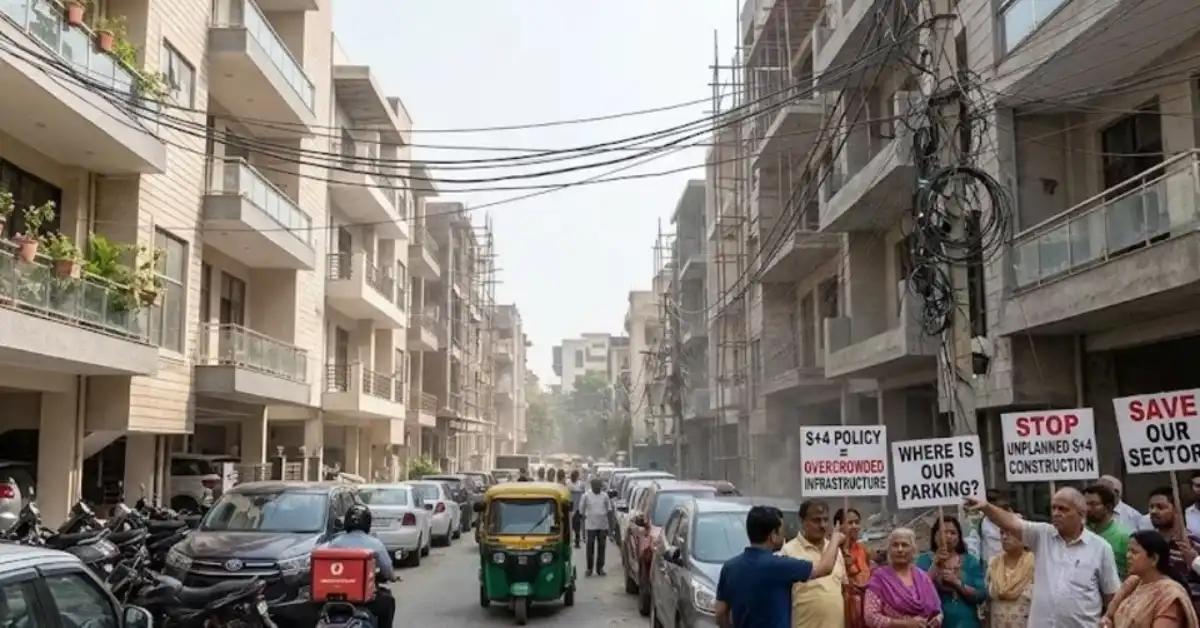

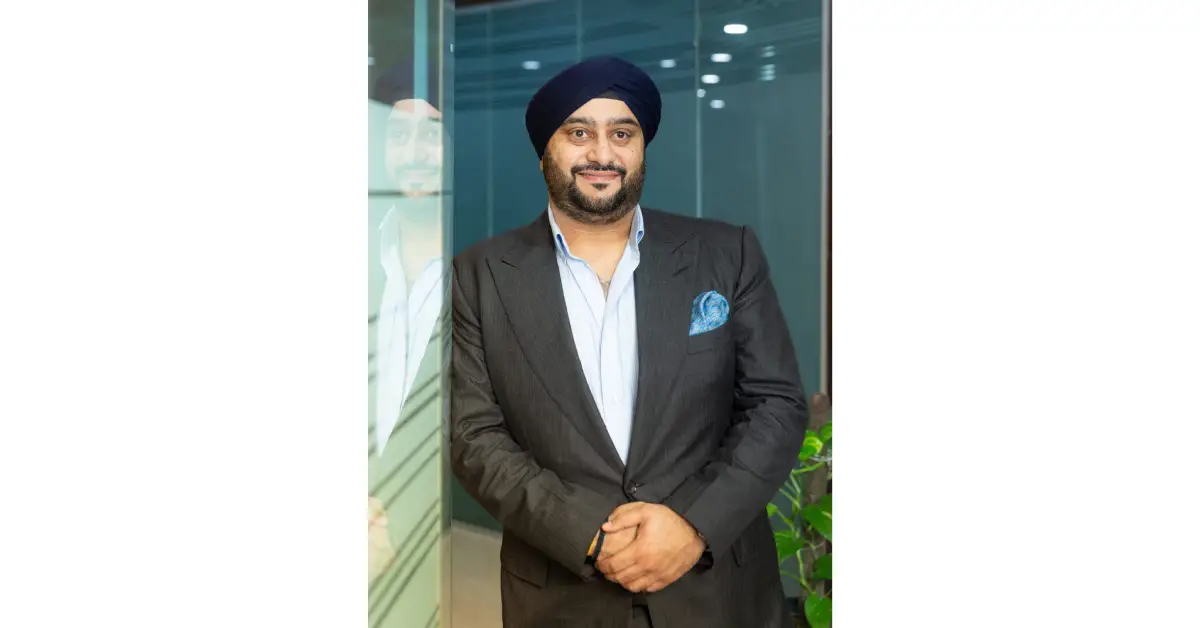
The real estate market has now entered a balanced phase. Demand and supply are evenly matched, interested buyers are looking for opportunities and real estate companies are increasingly aligning their offerings to cater to this demand. For TREVOC Group, the new market conditions have presented possibilities in other areas, especially in the cities bordering Delhi and Gurugram. In this interview, Gurpal Chawla, Managing Director of TREVOC Group, shares his views with us about their selection of new markets, incorporation of sustainability, and his predictions regarding real estate in the coming years.
1. How is the TREVOC–Canonicus partnership different from traditional last-mile funding models in NCR?
Most traditional last-mile funding approaches are largely capital-led, where the assumption is that liquidity alone can unlock stalled projects. However, in reality, many near-completion projects in NCR suffer from deeper execution challenges — such as contractor inefficiencies, fragmented decision-making, and lack of structured oversight. The TREVOC–Canonicus partnership has been designed as an execution-led funding platform. While Canonicus Capital brings disciplined, structured institutional capital, TREVOC takes end-to-end responsibility for on-ground execution, governance frameworks, milestone-driven construction planning, and stakeholder coordination.
2. TREVOC Royal Residences is positioned as an ultra-luxury development in Gurugram. Could you share an update on the project’s construction progress and key milestones achieved so far?
TREVOC Royal Residences is progressing steadily in line with our planned construction schedule. We have successfully completed key groundwork and structural milestones, and the project has now moved into advanced stages of core construction. Our focus is not only on speed but on precision and quality control at every stage. We have deployed structured milestone tracking, experienced contractors, and stringent site supervision to ensure timelines remain on track while maintaining the premium standards that define the development.
3. Emerging Tier-2 and Tier-3 cities are increasingly attracting attention from developers and occupiers. What are the key drivers for real estate growth in these markets, and what risks should developers be mindful of?
Tier-2 and Tier-3 cities are witnessing strong real estate momentum primarily due to improving infrastructure, rising disposable incomes, and the decentralisation of employment hubs beyond metros. Enhanced connectivity through highways, airports, and rail networks, along with the growth of IT, manufacturing, education, and healthcare sectors, is driving both residential and commercial demand. Additionally, comparatively affordable land prices and better quality of life are encouraging both developers and homebuyers to look beyond Tier-1 cities.
4. What strategic priorities does TREVOC Group have for its expansion into new growth corridors such as Sohna, Sonipat, Kundli, Panipat and Karnal over the next 3–5 years?
We are not approaching these markets with a land accumulation mindset. The idea is to enter locations where connectivity is bolstered by UER II and RRTS, basic social infrastructure, and buyer comfort are visibly improving. Sohna, Sonipat, Kundli, Panipat, Karnal and the northern belt are reaching that stage now. Our focus is on formats that suit genuine end users: plotted developments, low-rise gated communities, and a few specialised concepts where differentiation makes sense.
5. Looking ahead to 2026 and beyond, which macroeconomic and demographic trends will most strongly shape India’s real estate growth?
Urbanisation will remain the single biggest structural driver, but the nature of demand is clearly evolving. Buyers today are far more discerning — they are prioritising gated communities, stronger infrastructure connectivity, security, and well-planned ecosystems rather than just location or price appreciation. From a demographic perspective, India’s young working population, rising dual-income households, and increasing preference for organised housing are shaping long-term residential demand. At the same time, the office segment continues to benefit from India’s positioning as a global services and technology hub, with sustained interest from multinational occupiers across select high-growth corridors.
At the same time, the sector is witnessing more structured approaches to resolving legacy supply challenges. In this context, TREVOC Group’s strategic partnership with Canonicus Capital to launch a ₹500 crore last-mile funding and execution platform in NCR reflects a growing focus on disciplined delivery. The platform is designed to accelerate the completion of near-completion projects that are delayed due to execution bottlenecks and last-mile liquidity gaps, reinforcing the importance of governance, accountability, and timely delivery in strengthening overall market confidence.