
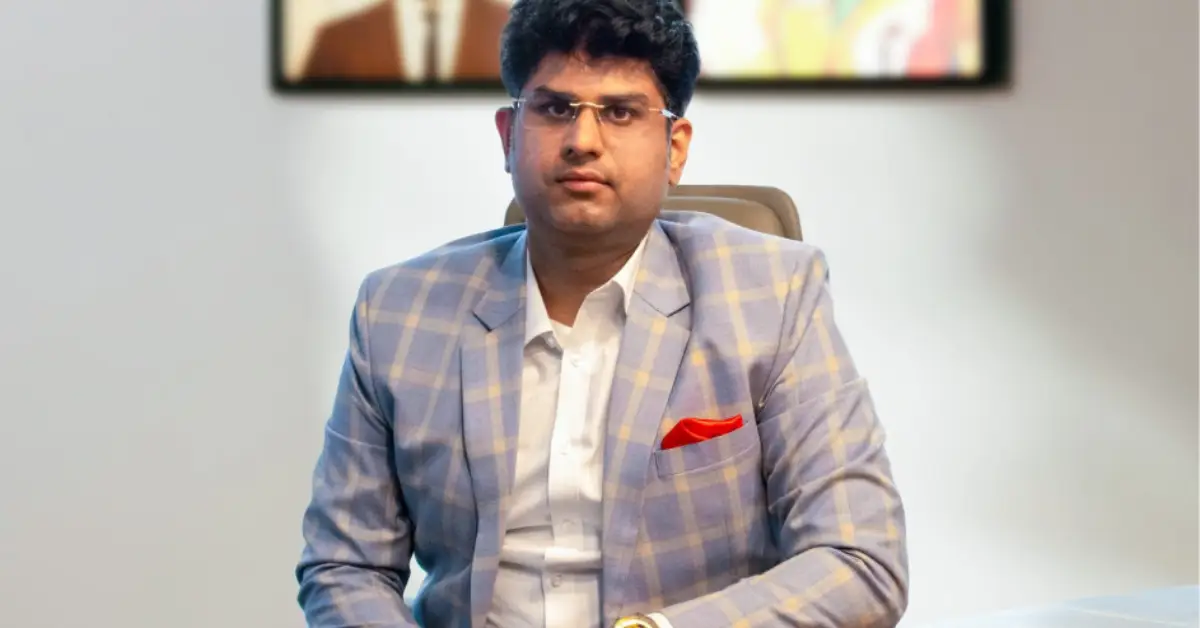
In today’s real estate environment, success is defined by far more than inventory and pricing. Markets are crowded, buyers are informed, and expectations are higher than ever before. Against this backdrop, leadership in sales and marketing requires clarity of thought, discipline in execution, and a long-term view of brand credibility. We discuss the topic with Mohit Kalia, Senior Vice President – Sales & Marketing, and seek his perspective on building high-performing teams, positioning differentiated developments, and earning buyer trust in a market that leaves little room for error.
Q1- As SVP – Sales & Marketing, what leadership principles guide the way you build high-performing teams and drive consistent results in a competitive real estate market?
Answer: Real estate is just too cyclical for leadership positions to be based solely on theory. Start with clarity, as even the most capable teams can lose direction without it. It is not just important for each person to grasp the goals they must meet, but also why those goals are important and how each one fits within the overall goal. Data is something I rely heavily on, yet I also understand the dangers of using data as fact. A significant amount of my time is focused on developing accountability that is clearly visible and fair, while at the same time developing training and decision-making authority. When people feel trusted and supported, performance becomes repeatable. Alignment then follows naturally.
Q2- How do you approach positioning and marketing HCBS -Twin Horizon to ensure it stands out in a crowded marketplace?
Answer: HCBS Twin Horizon is an ultra-luxury residential development located in Sector 102 next to the Dwarka Expressway. Designed by the acclaimed firm Morphogenesis, Twin Horizon has always been a proposition of extreme exclusivity. Its two towers, each rising 34 stories, will house only 268 residences. The design philosophy champions privacy and expanse with a one-to-a-core layout and three-side open apartments. The amenities are the stuff of local legend, from a monumental clubhouse to the region’s first elevated infinity-edge pool.
As you can understand now that HCBS Twin Horizon centres on precision instead of scale; fewer homes, a privacy storytelling model, and a design aesthetic that focuses on space and breathing room. Marketing is based on how to experience the home, not how to measure it. We communicate with people who already get the meaning of luxury but are now entering a space where they want to be discreet and want to future-proof. Technology is leveraged to communicate and qualify interest. By the time we are engaging with people to sell them the project, it should already be familiar.
Recently we had also introduced, the Special Early Bird Offer that requires a booking amount of just 10% of the property’s value. This initial step is followed by a subvention-like EMI structure specifically designed to cover the heart of the construction period. For the next three years, until 2029, monthly installments will start at approximately Rs. 40,999.
Q3- What factors influence the sales and marketing strategy for ongoing and upcoming HCBS developments?
Answer: Strategy today is shaped more by signals than instinct, as was the default for the real estate sector. Now the approach is more data-driven. Besides, micro-market absorption, competitor behaviour, location advantages and buyer liquidity cycles all influence how we plan. For HCBS projects, infrastructure visibility and location are especially important. An ongoing development demands confidence-building and proof of progress, whereas an upcoming one requires clarity around future value and delivery intent. Internally, the strategy is also constrained by operational readiness. Aggressive marketing achieves little if delivery, CRM, or post-sales systems are not scaled appropriately. In practice, internal alignment often determines external success.
Q4- What key trends are currently shaping homebuyer preferences, and how should developers evolve their strategies to stay relevant?
Answer: To begin with, the project has to exude a wow factor. Newness is also important, but it has influenced the value not only of the space but also how meaningfully it articulates buyer concerns. Space still counts, but how the space is designed to improve the inhabitants’ lives is even more important. Things like the view from the balcony matter a lot. There is an increasing need for privacy without isolation, and technology that streamlines rather than complicates day-to-day living. It’s time for developers to shift from moving inventory to curating a lifestyle.
Q5- With rising competition and informed buyers, how important is brand trust today in real estate, and how can companies effectively build it?
Answer: Brand trust has become central to decision-making. In a transparent market, claims carry limited weight on their own. Buyers are watching closely, especially when things don’t go according to plan. How timelines are communicated, how post-sales issues are dealt with, and how consistently commitments are honoured all help build trust. Companies that invest in process discipline and ethical selling reduce friction at every step of the transaction. And in due course, that kind of trust often proves worth more than marginal pricing benefits.