
By Dr Annkit A Jayant, CEO, HP Global Infrra
For generations, Haridwar has held a singular place in India’s cultural and spiritual landscape. It is a city people visit with devotion—whether to seek blessings on the banks of the Ganga, participate in sacred rituals or begin the Char Dham Yatra. Yet, the city’s story is beginning to evolve. Better connectivity with Delhi-NCR, improving civic infrastructure and a more organised pattern of development are gradually reshaping Haridwar beyond its pilgrimage economy.
Despite its continued importance from a spiritual standpoint, the city is becoming more of an urban destination by the day. Well-planned residential colonies along with improved social facilities and cleaner surroundings have made it a more appealing place to settle down in. In other words, the future of Haridwar seems to be taking shape, where both spirituality and livability will play a crucial role.
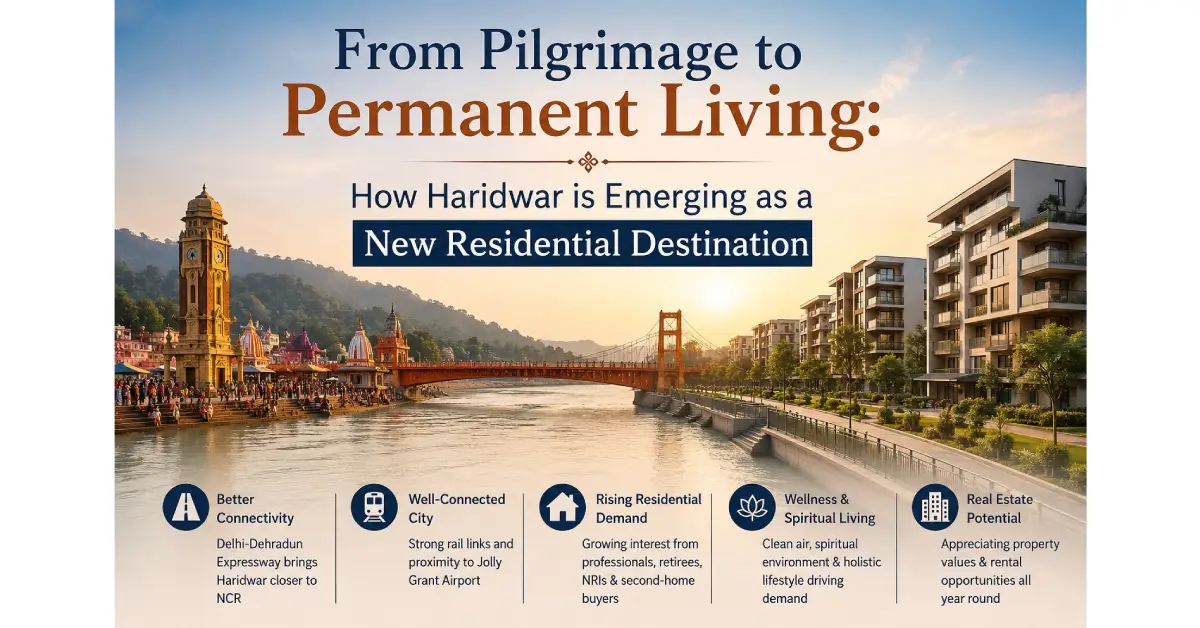
Haridwar’s growing residential appeal is closely tied to a transformation in regional connectivity. The inauguration of the 213 km Delhi-Dehradun Expressway has reduced travel time from Delhi to Haridwar, Mussorie and Rishikesh by nearly 2.5 hours, bringing Uttarakhand’s key urban centres much closer to NCR. Industry experts believe the corridor could reshape real estate across North India. Haridwar is expected to benefit from rising demand for second homes, plotted developments and hospitality-led investments. Micro markets in NCR and western UP will get traction from end-users as well as investors. Prices are likely to appreciate by 15 to 25% in major segments along this corridor.
Beyond the expressway, Haridwar’s position on the Char Dham corridor, its strong rail connectivity with major North Indian cities and convenient access to Jolly Grant Airport in Dehradun are making the city more accessible than ever before. Together, these improvements are reducing the practical and psychological distance between Haridwar and the country’s largest homebuyer market, allowing the city to evolve from a seasonal destination into a realistic choice for permanent and second-home living.
Besides, changing lifestyles are also redefining who is buying in Haridwar and why. The portion of demand has increased significantly from customers outside the city, especially professionals from Delhi NCR who want weekend houses, retirees and families looking for a second home. It is estimated that the market for luxury second homes in India stands above three billion dollars, growing at around 20% per year, with a significant growth in Uttarakhand.
Haridwar is well placed to benefit from this shift
For many buyers, it offers a combination that is becoming increasingly difficult to find elsewhere—a peaceful setting, cleaner surroundings, lower living costs and a deep cultural connection. Affluent purchasers and NRIs are also seeing the city as an investment into their life style in the long run. They are buying properties which they can use not only today but even in the later stage of life as well. While once people used to stay at hotels whenever they came to the city, now they prefer buying apartments, villas or even plotted houses.
As this demand grows, so too does the city’s housing scenario. While traditional areas comprising single homes and informal colonies give way to gated enclaves, contemporary apartments and planned townships with improved facilities and amenities, the spiritual heritage of Haridwar assumes new significance in a health-conscious world. The demand for residences offering yoga, Ayurvedic healing, meditation, integrative health, and elder care becomes increasingly strong, with the clean air, plenty of greens, less traffic pollution, and the River Ganga ensuring the city’s growing popularity.
In addition, the religious importance of Haridwar provides an added edge to the residential market there. As one of the gateways of the Char Dham Yatra, this city sees millions of pilgrims each year on account of Kumbh Mela, Kanwar Yatra, Ganga Aarti, and other religious fairs. The flow of such tourists keeps the demand high for hotels, service apartments, vacation homes, and rental homes all year round. In turn, property owners get an added advantage of a consistent rental market.
Thus, Haridwar’s future is no longer being shaped solely by the people who come to visit, but increasingly by those choosing to make it home. As infrastructure, organised development and lifestyle aspirations continue to align, the city is carving out a distinct position where spiritual heritage, modern living and long-term residential potential come together.