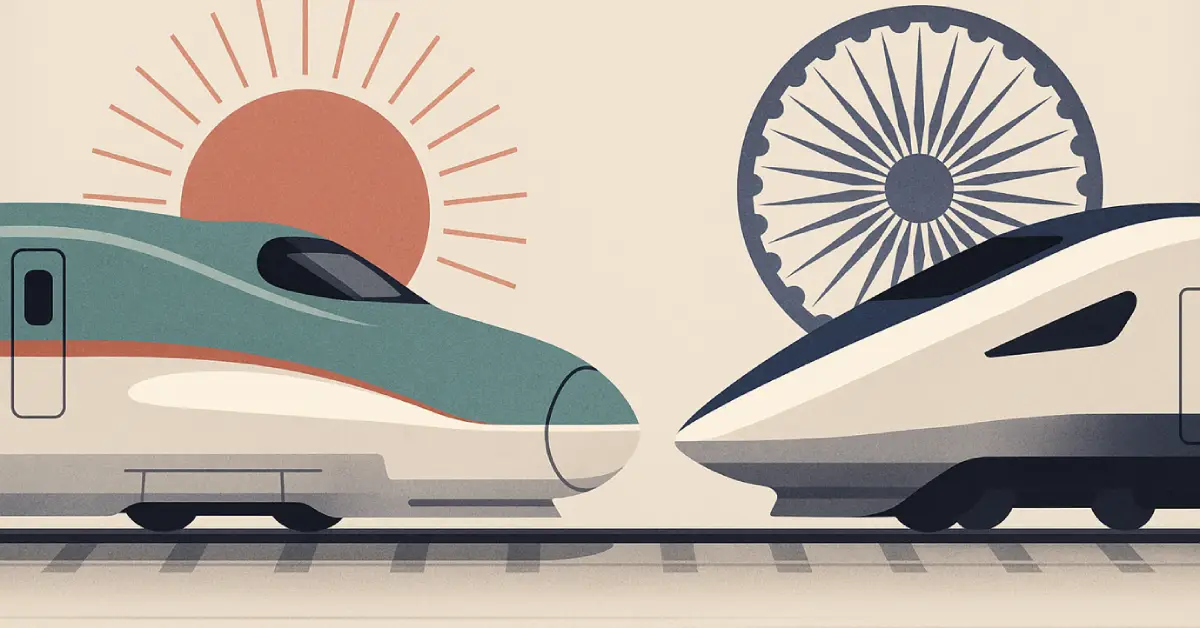
India’s first high-speed rail corridor – Mumbai-Ahmedabad Bullet Train project status, Japanese Shinkansen safety features, 2026 construction milestones, travel time reduction, job creation, and real estate boom explained with verified stats.
Project Snapshot: Key Statistics at a Glance
- Route Length: 508 km with 12 stations (Mumbai, Surat, Vadodara, Ahmedabad + 8 others)
- Operational Speed: 320 km/h (Design: 350 km/h) – reducing journey time from 7-8 hours to just 2 hours
- Train Model: Adapted Japanese E5 Series Shinkansen trainsets (10 cars each, with plans for advanced variants)
- Total Cost: ~₹1.98 lakh crore (escalated); 81% funded by JICA soft loan at 0.1% interest
- Timeline: Partial operations targeted for 2027; full corridor by 2028-2030
- 2026 Progress: 55-56% complete, ₹83,000+ crore spent, near-100% land acquisition in Gujarat
Shinkansen Technology: World’s Safest & Most Reliable High-Speed System
India’s first bullet train imports proven Japanese Shinkansen expertise – renowned for unmatched safety, precision engineering, and disaster resilience.
Key Shinkansen Highlights Adopted for Mumbai-Ahmedabad Corridor:
- Zero-Fatality Safety Record: No passenger deaths from derailments, collisions, or accidents since operations began in 1964 – despite carrying over 10 billion passengers across 60+ years
- Legendary Punctuality: Average delay per train as low as 0.6-1.6 minutes (including weather/natural disasters) – Tokaido Shinkansen averaged just 36 seconds in peak years
- Advanced Safety Systems:
Automatic Train Control (ATC): Fully digital, cab-based signaling eliminates trackside signals for precise speed control and collision prevention
Earthquake Early Detection: Seismometers along tracks detect primary waves (P-waves) seconds before shaking, automatically stopping trains – proven effective in multiple major quakes
Aerodynamic design (iconic long-nose E5 profile) minimizes noise, tunnel boom, and air pressure waves
Shinkansen Earthquake Protection System
- E5 Series Train Features: 10-car trainsets with regenerative braking, lightweight aluminum body, and advanced aerodynamics – operational speed 320 km/h in Japan (adapted for Indian climate/conditions)
Technology Transfer & Make in India Boost
- Comprehensive Knowledge Transfer: Japan shares full Shinkansen technology – design, manufacturing, operations, and maintenance – training thousands of Indian engineers and technicians
- Local Manufacturing: Future trainsets and components to be built in India under “Make in India,” creating long-term high-tech rail ecosystem
- Strategic Impact: Positions India to expand HSR network independently (e.g., Delhi-Varanasi, other corridors under planning
Economic Surge: Jobs, Real Estate & GDP Acceleration
- Employment: 20,000+ direct jobs in construction; 1 lakh+ indirect; thousands more in operations/maintenance with Shinkansen skills
- Real Estate Boom: 25-40% property value surge near stations (Surat, Vadodara, peripheral Mumbai)
- GDP Impact: Global HSR corridors deliver 2.7%+ average annual growth boost to connected regions – similar multiplier expected here
Why This Matters for India’s Future
The Mumbai-Ahmedabad HSR isn’t just faster travel – it’s importing the gold standard of high-speed rail technology, building indigenous capability, and catalyzing sustainable economic corridors across India.
India’s bullet train era arrives in 2027 – safer, faster, and more connected than ever.
Data verified from NHSRCL official updates, JR Central reports, JICA documentation, and credible global rail analyses (2025-2026)