
Saudi Arabia is preparing to host the 2034 FIFA World Cup, and it’s doing so with an initiative on a scale the world has never seen. At the center of its plans is a $1 billion stadium suspended 350 meters above the desert floor, built into the futuristic city of The Line in Neom. This sky-high arena, set to be one of 15 venues for the tournament. It’s a symbol of the country’s drive to showcase cutting-edge design, environmental technology, and global sporting vision all at once.
A $1 Billion Marvel in the Desert
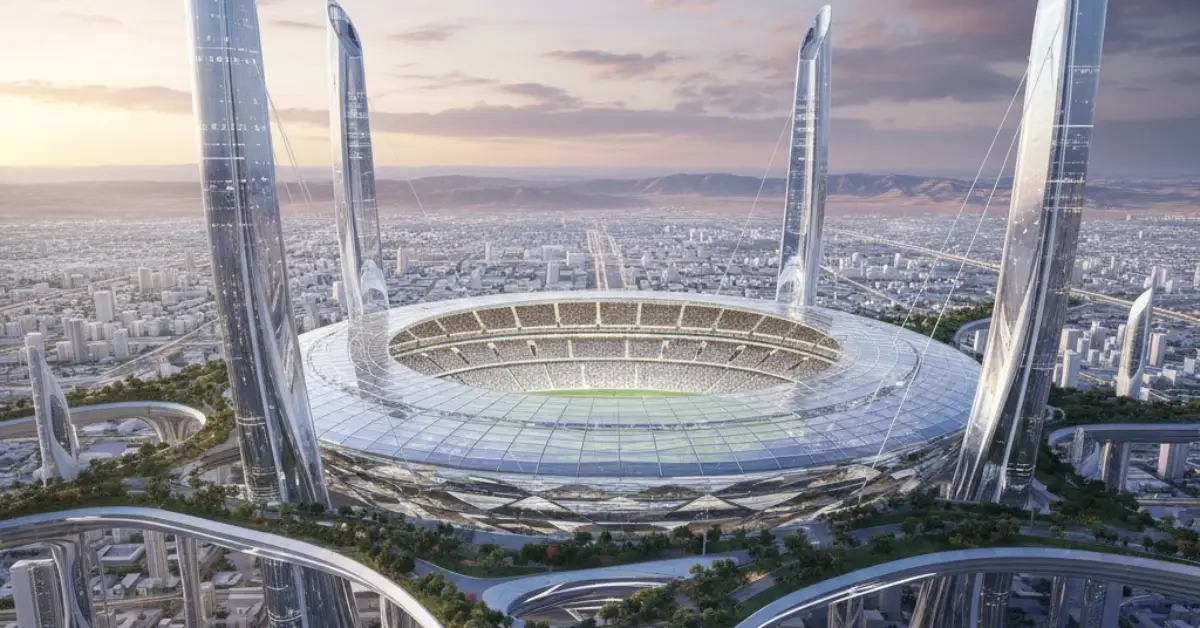
The Neom Stadium will be integrated directly into The Line, the linear city stretching 170 kilometers across Saudi Arabia’s northwestern coast. Unlike any stadium built before, this one will sit at the top of the mirrored megastructure, literally embedded in the city’s vertical architecture. It’s estimated to cost approximately $1 billion and is scheduled to begin construction in 2027, with completion expected by 2032, two years before kickoff.
Designed to seat around 46,000 spectators, the stadium will host matches from the group stage through the quarterfinals. The project is known for its bold and futuristic designs. The Neom Stadium will serve as a World Cup venue & also as a year-round sports and entertainment hub once the tournament ends.
High-Tech Design and Sustainable Features
The design of the Neom Stadium is defined by sharp geometry, mirrored surfaces, and LED-lit elements that blend into the surrounding landscape. The roof appears fractured, like shards of glass hovering above the arena, creating a visually striking structure from every angle. Inside, the seating bowl has a beehive-like layout designed to maximize visibility and acoustics.
Crucially, the stadium will be 100% powered by renewable energy. It’s part of a broader commitment to sustainable infrastructure within Neom and Vision 2030, Saudi Arabia’s national transformation plan. Fans will access the venue using electric transit systems, and the surrounding sports district will include training fields, accommodation, retail, and leisure spaces. The goal is to create a net-zero carbon environment without sacrificing innovation or luxury.
Neom Stadium’s Role in Saudi Arabia’s 2034 World Cup Strategy
The Neom Stadium is one of 15 stadiums planned for the 2034 FIFA World Cup, across five main regions: Riyadh, Jeddah, Al Khobar, Abha, and Neom. Of these, eight are new builds and four are major redevelopments of existing venues. The full stadium rollout represents a combined investment of more than $20 billion, a significant part of the country’s efforts to develop world-class infrastructure.
Other major stadiums include the King Salman International Stadium in Riyadh, a 92,000-seat coliseum-like structure that will host the opening and final matches; the Prince Mohammed bin Salman Stadium, a cliffside venue in Qiddiya with retractable pitch and roof systems; and the New Murabba Stadium, inspired by the textures of desert trees and designed as a multifunctional space for entertainment post-tournament. Additionally, the Aramco Stadium in Al Khobar, also budgeted at over $1 billion, will serve the eastern region and features a vortex-shaped form inspired by water currents.
With its height and design, the Neom Stadium is a redefinition of what a football stadium can be. Hosting games more than a quarter-mile above the ground is a world first, and it reflects Saudi Arabia’s strategy to reshape the global narrative around design, development, and sport in the Middle East.
Beyond the World Cup, the stadium is expected to anchor a new sports ecosystem in Neom, with a permanent club tenant, recurring international events, and tourism draw. Its completion will mark a new chapter in architectural engineering and event hosting for Saudi Arabia and the global sports arena as a whole.
Source: Parametric Architecture