

Authored by – Dr. Gautam Kanodia, Founder, KREEVA and Kanodia Group
India’s economic growth today is no longer reflected only in macroeconomic indicators and business performance. It is increasingly visible in the way people aspire to live and invest. Across the country, rising incomes, improving infrastructure, and growing consumer confidence are reshaping the housing market in a meaningful way. Homebuyers today are looking beyond ownership and are placing greater value on quality living, well-planned communities, lifestyle convenience, and long-term asset creation. At the same time, the rise of an aspiration-driven middle and upper-middle class, supported by a more formal and structured economy, is creating strong momentum for the real estate sector and positioning it at the centre of India’s urban transformation.
The expectations for housing have also evolved significantly over the last few years. Earlier, homeownership was largely driven by the need for security and long-term stability. Today, the decision is far more lifestyle-oriented. Buyers are increasingly looking for homes that offer better living experiences, wellness-focused amenities, open green spaces, privacy, and integrated community environments.
According to Anarock’s data, NCR has delivered the strongest price appreciation across every category— a massive 72% jump in luxury home prices and 54% growth in mid-range and premium housing. The pandemic further accelerated the preference for larger homes with flexible spaces that support work, leisure, and family life. In many ways, the Indian homebuyer today is moving beyond transactional ownership and becoming a far more experience-driven consumer, with greater emphasis on quality of life and long-term value creation.
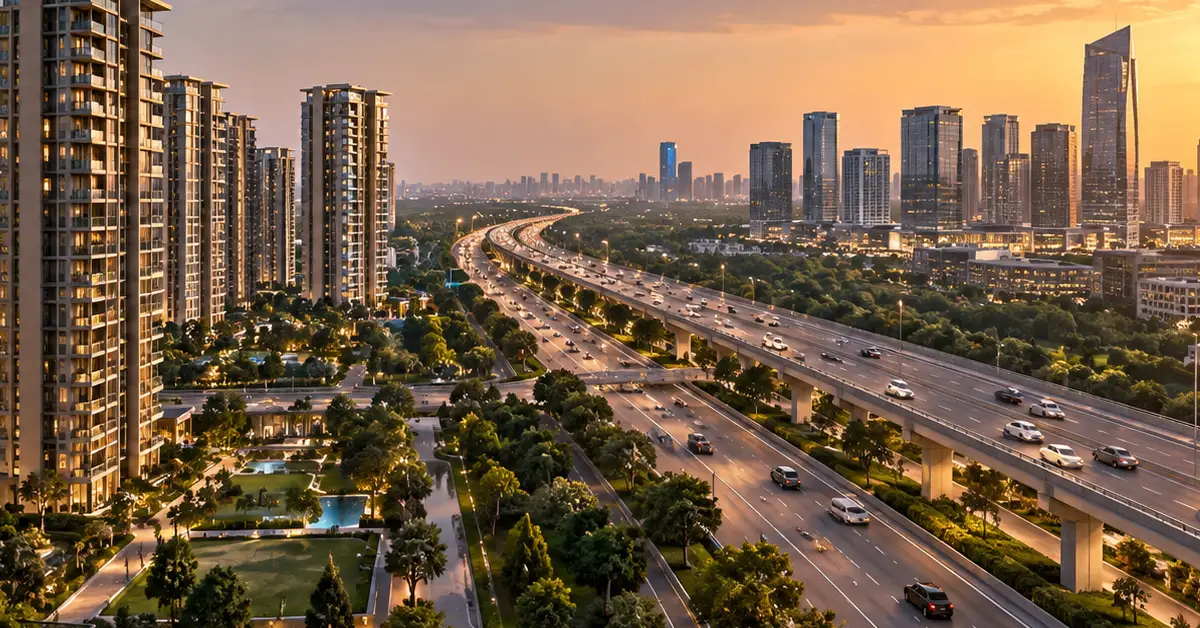
Perhaps the most visible outcome of this shift is the changing geography of aspiration across India’s housing market. The surge in demand for premium and lifestyle-led housing is spreading across emerging corridors, peripheral growth zones, and infrastructure-driven micro-markets. Locations such as Dwarka Expressway, SPR, Noida Expressway, Yamuna Expressway, New Gurgaon, and several growth corridors in Bengaluru and Hyderabad are witnessing strong residential momentum, driven by improved connectivity and large-scale urban development. Better roads, metro expansion, airports, and commercial growth are transforming these destinations into self-sustained urban ecosystems rather than just affordable alternatives to city centres. Undoubtedly, infrastructure is playing a defining role in decentralising aspiration, allowing homebuyers to access upgraded lifestyles beyond the boundaries of traditional metropolitan addresses.
Besides, the market data backs this growth. Dwarka Expressway added 2,500 units this quarter, reinforcing its position as NCR’s most active residential corridor, supported by improved airport connectivity, UER-II integration, and pricing advantages over central Gurugram. Better infrastructure is gradually reducing the distance between workplaces, business districts, and residential communities, making newer growth corridors far more liveable and aspirational. As a result, homebuyers today are becoming more open to future-ready destinations that offer stronger long-term potential, planned urban development, and a better quality of life, rather than limiting themselves to traditionally established city centres.
At the same time, the strong appreciation witnessed across several infrastructure-led corridors has reinforced buyer confidence in the sector’s long-term potential. High-end residential submarkets in Delhi-NCR recorded annual capital appreciation of 3- 4%. Gurugram witnessed stronger growth, with prices rising 7% on a y-o-y basis, while the city’s luxury segment recorded the highest y-o-y rental growth at 10%. Greater transparency, the rise of organised developers, and increasing awareness around institutional real estate formats such as REITs have further strengthened market confidence.
A stable policy environment and greater regulatory transparency have also played a significant role in strengthening buyer confidence. Measures such as RERA have brought higher accountability and credibility to the market, while the growing presence of organised developers has improved trust among homebuyers. As a result, India’s housing market today appears far more structured, end-user driven, and sustainable than the speculative growth cycles witnessed in the past.
India’s real estate sector today represents far more than physical development and construction activity. It reflects the country’s rising aspirations, growing prosperity, and the steady evolution of urban lifestyles. India’s economic transformation is now becoming visible not only through infrastructure expansion and business growth. As the country enters its next phase of growth, real estate is likely to remain one of the strongest and most visible expressions of India’s aspirational and economic progress.