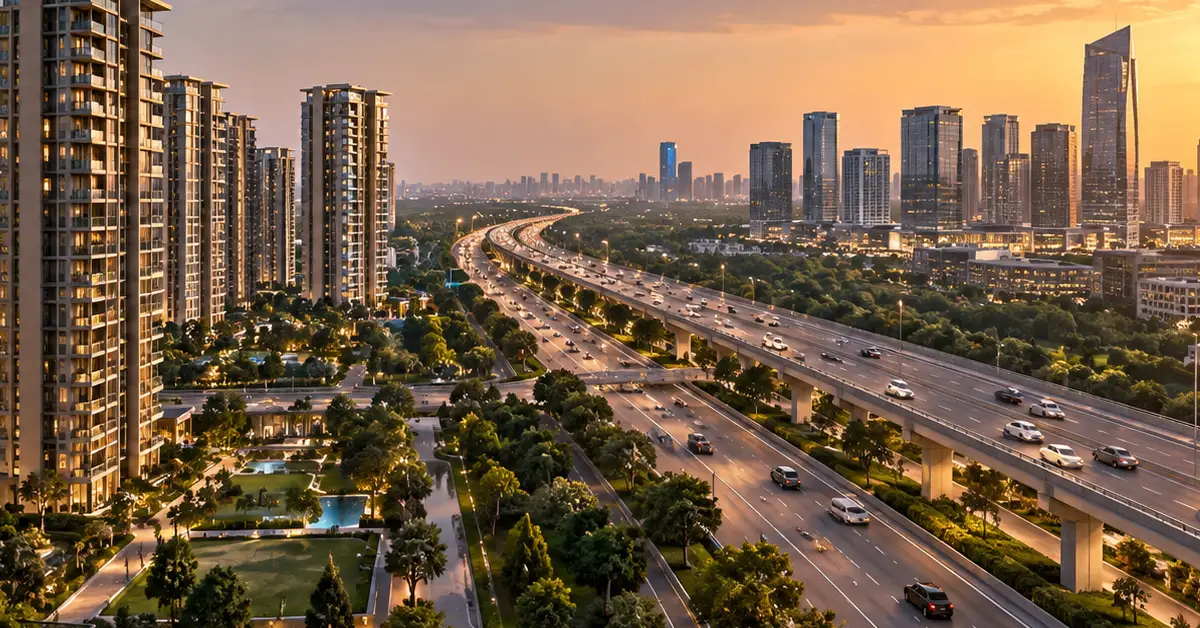


Think Gurugram, and the image that usually appears is of glass towers, expressways, golf-side luxury projects, and the constantly expanding skyline stretching toward newer sectors. Yet the city’s commercial pulse did not begin there. Long before the language of “luxury residential towers”, “global corporate offices”, “mixed-use destinations” and “high street experiences” entered real estate presentations, Old Gurugram, with antecedents dating back to Mahabharata times, had already evolved into a functioning urban ecosystem.
That distinction matters today more than it did a decade ago. Because some of the strongest retail opportunities in NCR are no longer emerging only from newly developing corridors. They are increasingly taking shape inside mature neighbourhoods where the city already lives, spends, commutes, gathers and returns every day.
Old Gurugram, particularly established sectors like Sector 14 and its surrounding residential belts, offers something that newer urban districts still spend years trying to create: stability of movement. Not merely infrastructure, but lived familiarity. Dense residential catchments, habitual footfall, trusted local markets, schools, healthcare institutions, banks, offices, legacy businesses, community memory, all layered over decades. One cannot masterplan that quickly, even with the best infrastructure.
New sectors often begin with roads and inventory, then wait for social and commercial behaviour to catch up. Old Gurugram operates in reverse. The consumers are already there. The spending patterns already exist. The market does not need to be imagined first.
And that changes retail economics completely.
In locations like Sector 14, commercial activity is not dependent on future occupancy projections or speculative growth assumptions. Demand already circulates through the ecosystem daily. This is also why many older markets retain surprisingly high resilience despite ageing infrastructure.
At one level, the limitations are visible. Parking shortages, fragmented shopfronts, low-rise formats, congested internal movement, outdated layouts, and uneven pedestrian experiences. Yet these very pressures are now creating redevelopment opportunities of a different kind, not greenfield expansion, but urban upgradation. The real opportunity in Old Gurugram is not to replace the ecosystem. It is to modernise the experience around an ecosystem that already works.
Modern retail formats entering established neighbourhoods inherit something most new developments struggle for years to build: predictable and recurring footfall. But the retail itself has changed. People are no longer visiting markets only to transact. They want environments where they can comfortably spend time, meet, eat, browse, return with family, or simply remain present for longer durations. Experience-led retail is often discussed in the context of luxury destinations or newly developed commercial zones, but mature neighbourhoods may actually possess a deeper advantage here because emotional familiarity already exists.
Consumers in Old Gurugram know the area instinctively. They understand the routes, recognise the market behaviour, trust the ecosystem and feel socially comfortable within it. That continuity creates stronger repeat engagement than many newly created retail districts, where the infrastructure may arrive first, but the urban culture is still forming.
On the flip side, development and redevelopment in established districts tends to create visible improvement immediately. When infrastructure upgradation happens in mature neighbourhoods, road access improves, parking becomes organised, retail mix evolves, public spaces become more usable, and consumers respond quickly because they were already emotionally invested in the location to begin with.
The upcoming commercial project in Sector 14 reflects this larger transition underway across older parts of Gurugram. Its strategic location, established residential density, institutional ecosystem and long-standing commercial activity give it a level of urban stability that many emerging sectors are still attempting to achieve.
In a nutshell, for a long time, NCR’s growth story was largely associated with outward expansion. New roads created new sectors, and new sectors created new investment opportunities. But as cities grow, they eventually begin rediscovering the value of their older parts. Not out of nostalgia, but because these locations continue to possess the one thing real estate cannot rapidly manufacture, organic urban life. And that is the strongest retail advantage of all.