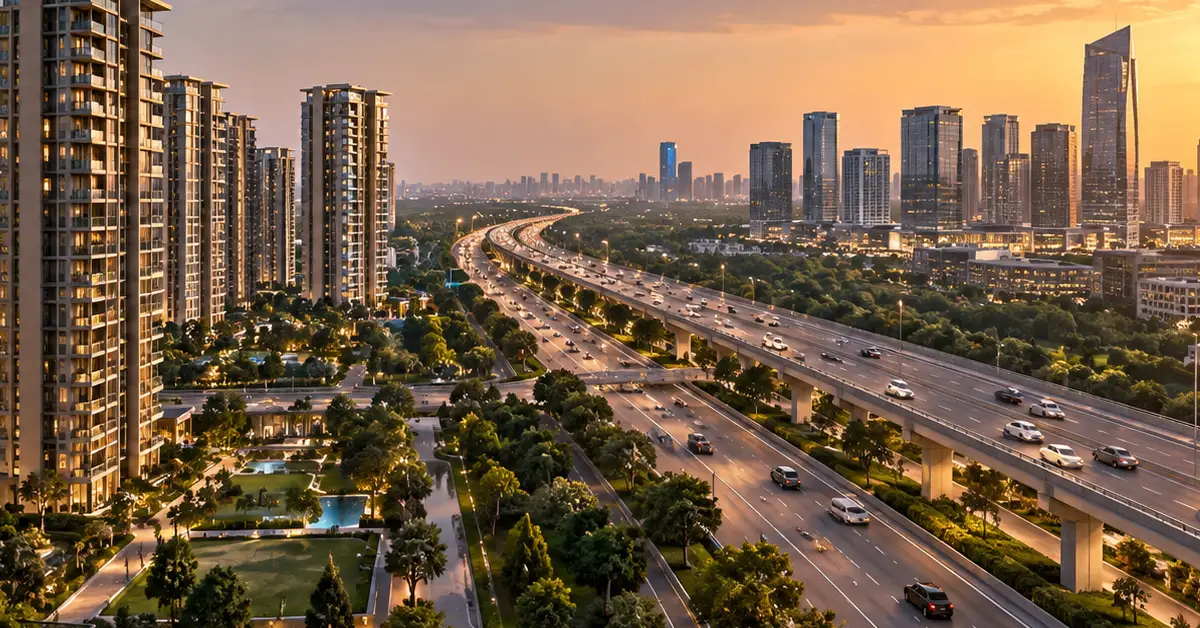


Something is changing in how people buy premium homes in NCR, and it’s not subtle anymore. The old checklist is being quietly retired. Square footage, developer brand, and floor number still get discussed, but they’ve stopped being the deciding factors they once were. What buyers are actually walking away thinking about now is whether a location will hold its value, how easily they can get to work or the airport on a bad traffic day, and whether the life they’ll live there matches what they’re paying for it. That’s a meaningful shift. And it’s reshaping which micro-markets are winning.
The corridors that are pulling ahead of Dwarka Expressway, Southern Peripheral Road, and New Gurugram aren’t emerging markets anymore. They’ve developed with time. The infrastructure investment that went into these corridors over the past several years is now showing up in buyer confidence, consistent appreciation, and the kind of organic demand that doesn’t need to be manufactured through offers and discounts.
Dwarka Expressway, in particular, has become something of a case study. Better road access, planned metro connectivity, commercial development filling in around it, the location has built an argument for itself that goes beyond any individual project sitting on it. Buyers aren’t just buying apartments here. They’re buying into a corridor they believe will be worth more in ten years than it is today.
For developers like MRG Group, this trajectory has informed where and how they build. MRG Crown in Sector 106 sits along this corridor, deliberately targeting buyers who’ve done their homework and are looking for a location that justifies the premium, not just a product that looks good on paper.
Who’s buying, and why
The demand profile has also shifted. Working professionals, business owners, and people upgrading from their first home; these buyers aren’t looking for exclusivity for its own sake. They want convenience that’s genuine, not just proximity to a golf course. They want security. They want to feel that the decision will age well financially.
There’s also a post-pandemic dimension that hasn’t fully faded. The experience of being locked inside a space, sometimes a very inadequate one, left a lasting impression on how people evaluate where they live. Open spaces, community design, wellness amenities, and breathing room have moved from aspirational add-ons to near-mandatory for buyers in this segment. Developers who haven’t caught up to that expectation are feeling it.
Investment logic is driving decisions alongside lifestyle
What’s particularly interesting about the current premium housing cycle is how openly buyers are applying investment logic to what was historically a lifestyle decision. Infrastructure-led corridors have shown consistent appreciation over time, and buyers, especially those with longer holding horizons, are factoring that in from the start.
Early movers into pockets like Sector 106 along Dwarka Expressway have watched that play out in real terms. That track record is now pulling in a second wave of buyers who see the same pattern unfolding and want in before the window closes.
Where this leaves the market
Luxury housing in NCR is maturing into something more grounded. The conversation has moved from what a project looks like to what it delivers over time, in real use, and in resale potential. Connectivity, location fundamentals, livability, and long-term value are the new luxury markers.
For MRG Group, the strategy has been consistent: find the growth corridors before they peak, build for what buyers will want when the project delivers, and let the location do much of the heavy lifting. As the market continues to evolve, that kind of location intelligence is likely to separate projects that hold their value from ones that simply looked good at launch.