
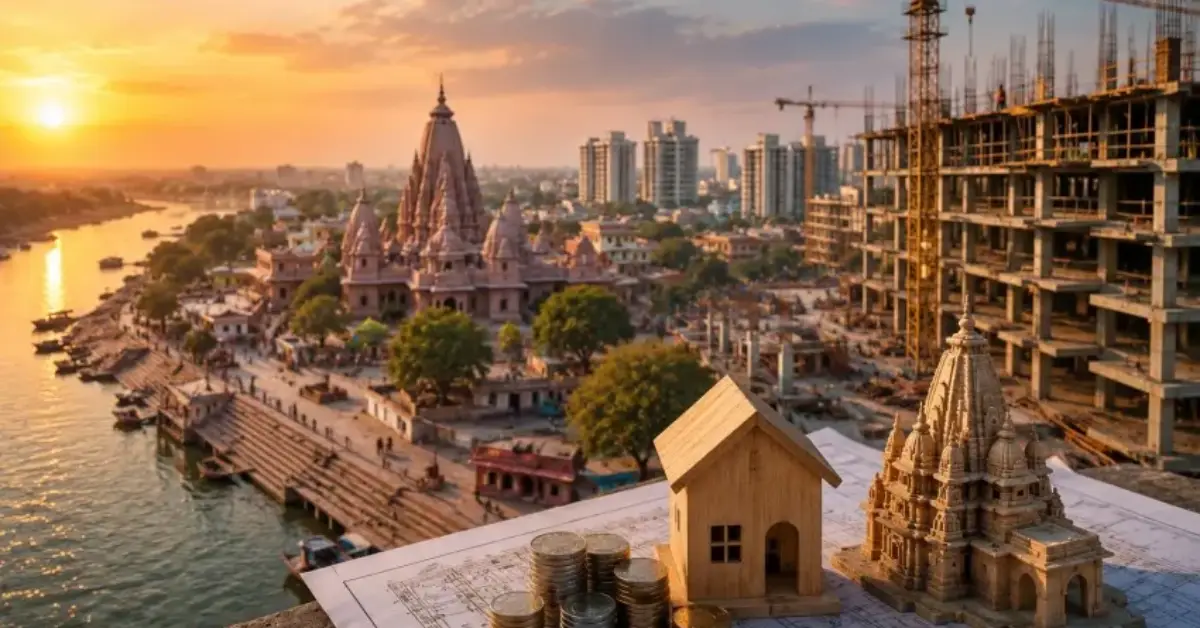
India’s temple towns are entering a new phase of growth. Traditionally shaped around pilgrimage, these destinations are increasingly becoming year-round tourism and economic centres, creating demand for better accommodation, retail, residential options, mobility and civic infrastructure. The challenge, however, is to facilitate this growth without allowing rapid urbanisation to dilute the cultural and spiritual identity that makes these places distinctive in the first place.
Government policy is increasingly recognising the need for this balance. Under schemes such as PRASHAD and Swadesh Darshan, pilgrimage destinations are being developed with an emphasis on sustainable tourism, better amenities, last-mile connectivity, sanitation, waste management and improved pilgrim experience. The Ministry of Tourism has specifically highlighted the importance of maintaining the spiritual integrity and character of such destinations while improving infrastructure.
Shirdi is a strong example of this evolving landscape. The city has traditionally been driven by pilgrimage-led demand, but improving connectivity and the emergence of more organised hospitality are broadening its economic potential.
“Shirdi is evolving beyond its traditional identity as a pilgrimage destination into a more organised tourism and hospitality ecosystem. As visitor footfall grows and stays become longer, the city will need better residential, hospitality, retail and civic infrastructure. Real estate development can play an important role in this transformation, but the focus should be on planned and sustainable growth that strengthens Shirdi’s infrastructure while preserving its spiritual character, cultural identity and sense of place,” said Neeraj Gulati, Managing Director, Assotech Realty.
The larger opportunity for real estate lies in moving beyond isolated projects towards integrated and context-sensitive development. Temple towns require infrastructure that can respond to large seasonal and daily visitor flows while also serving permanent residents. This means better roads and pedestrian networks, organised parking, sanitation, water management, public spaces, hospitality infrastructure and appropriately planned residential development. Such planning can help prevent unorganised expansion and ensure that commercial growth complements, rather than competes with, the town’s core identity.
For developers, this also calls for a different approach to project planning. “The growth of temple towns needs to be supported by development that is planned around the local ecosystem rather than simply adding built-up space. Residential and commercial projects must integrate green infrastructure, efficient resource management and community-oriented amenities, while respecting the character of the surrounding destination. At Ansal Housing, our approach has consistently included green cover, rainwater harvesting and responsible planning across our projects, demonstrating how development and sustainability can be integrated into the built environment,” said Mr. Kushagr Ansal, Director, Ansal Housing.
This becomes particularly relevant as temple towns transition from short-duration pilgrimage destinations to multi-purpose visitor economies. Longer stays can create demand for hotels, serviced residences, retail, restaurants, wellness facilities and second homes, while improved infrastructure can encourage greater investment and employment. However, the development mix needs to remain aligned with local carrying capacity and planning frameworks. The government’s PRASHAD framework itself incorporates carrying-capacity considerations and stakeholder consultation into pilgrimage destination planning.
The opportunity, therefore, is not about choosing between preservation and development. It is about making development responsive to the identity of the place. Architecture, land use, mobility, landscaping, public spaces and commercial activity can all be planned to reflect local culture rather than imposing a generic urban model.
For temple towns such as Shirdi, the next phase of real estate growth could consequently be defined not merely by the volume of construction, but by the quality and relevance of that development. If residential, hospitality and commercial infrastructure grows alongside civic amenities, environmental safeguards and heritage-sensitive planning, real estate can become an enabler of a more organised visitor economy while helping preserve the character that draws people to these destinations in the first place.